
Simple Installation, Powerful Intelligence
Wellntel transforms nearly any submersible pump well into a real-time monitoring point, by installing the Wellntel sensor into a standard 1/2” NPT port - either by using the existing port on a well seal or tapping a new one. Utilizing a digitally controlled acoustic signal, the system captures precise water-level data without touching water. This makes installation on existing wells both simple and cost-effective, while minimizing operating risk. As a fully integrated solution, it arrives with the sensor, telemetry, and cloud platform ready to go for true, out-of-the-box connectivity.
Precision Built for the Field
Engineered to thrive in harsh environments, the rugged hardware is rated for temperatures ranging from –40°C to +65°C. It offers a versatile depth-to-water range of 5 to 750 feet and is designed for use in casing of diameters from 2 to 18 inches, ensuring compatibility with a wide variety of wells. Once calibrated, the system delivers continuous performance with no instrument drift, meaning you won’t need to worry about recalibration unless the well undergoes major physical changes.
Reliable Data
Accuracy is at the heart of the system, delivering 0.1 ft precision within its depth-to-water range. The technology has been USGS-tested and meets California BMP standards. Unlike traditional sensors that can drift due to sediment or pressure changes, Wellntel’s acoustic technology maintains 0.1 ft accuracy without the need for constant field cleaning or cable adjustments. The Wellntel sensor captures water levels on a fixed schedule or in direct response to pumping activity. Users can customize measurement intervals—ranging from every 2 minutes to once every 24 hours—to ensure the data density meets their specific monitoring requirements.
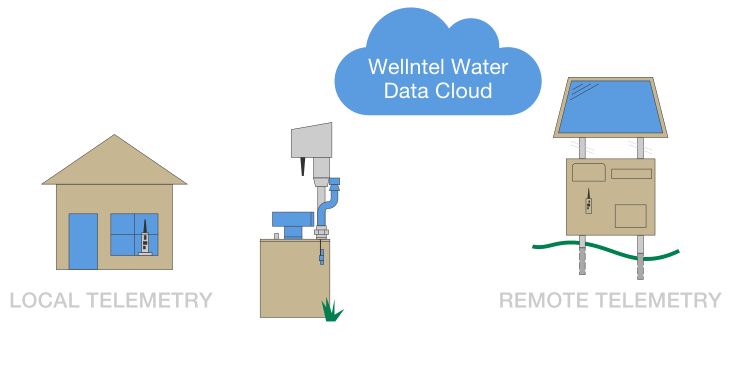
The Wellntel Sensor uses digitally controlled sound to non-invasively measure water levels, either on a set schedule or in connection with your pump runs. The sensor communicates via a long-range radio to a Gateway located up to 1,800 feet away. By using radio instead of Wi-Fi, the system ensures a secure and stable connection that won't drop out.
The Gateway connects to the internet via Ethernet - either through a broadband router or a cellular modem - and securely sends encrypted data to the Wellntel Cloud. Because it uses a direct connection, there’s no need to access local networks or manage passwords. Your data is then safely stored and ready for you to analyze or share through our Analytics Dashboard.
Whether the sensor is connecting to the cloud using a local internet connection or a cellular connection, your data remains protected. The platform is hosted on Google Compute Engine, utilizing a robust 3-tier architecture and AES-128 encryption to ensure the highest standards of security and privacy.