
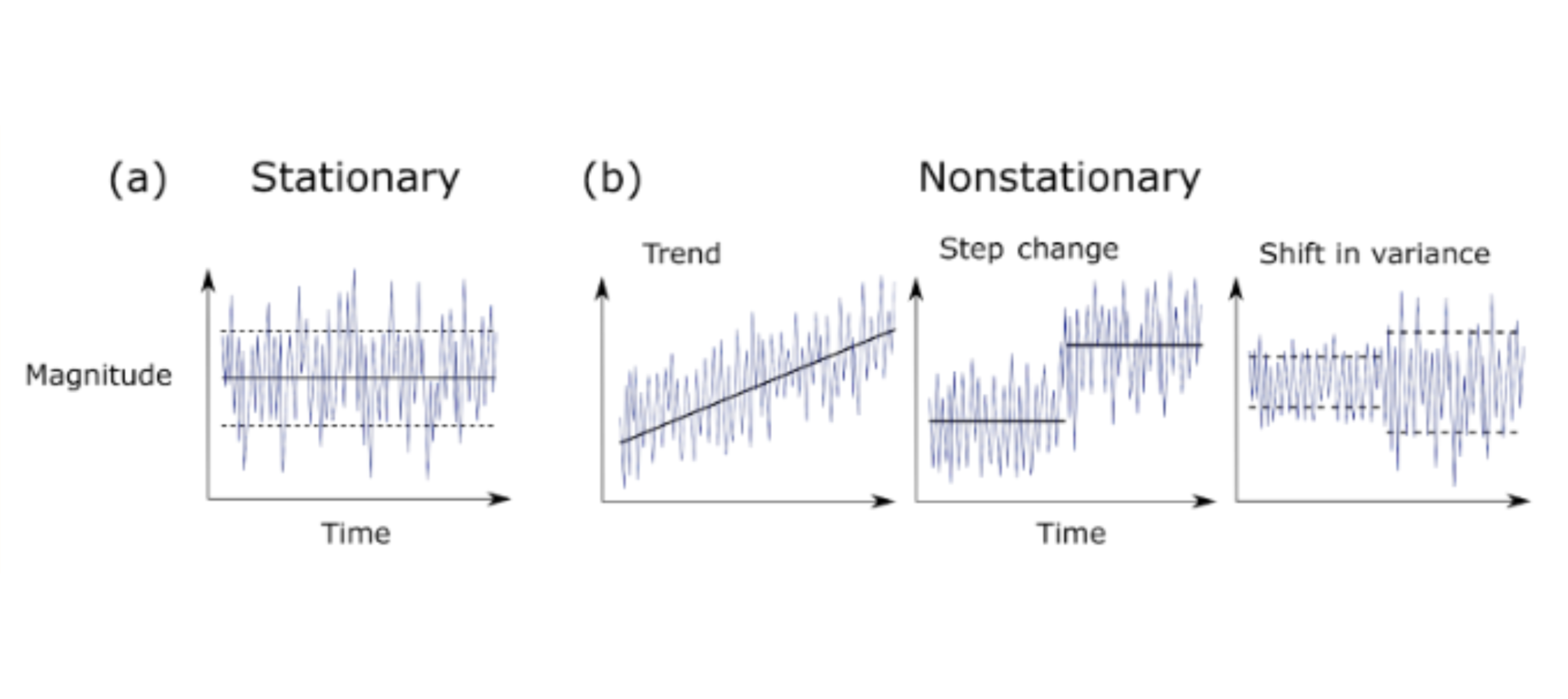
Six years ago, Wellntel posted a blog titled “In a nonstationary world, continuity of observations is critical” - the title was a statement taken from an article in Science by Milly and others (2008). The message of the blog was that the physical drivers of hydrologic systems have increasingly been altered by climate change and as a result, greater temporal and spatial density of data are required to build the hydrologic understanding to meet local and regional groundwater challenges.
Six years on, we are all experiencing the continued disruption of climate patterns, the increasing variability of precipitation, and the growing reliance on groundwater by industry, agriculture and communities. Nonstationarity, whether inherently natural or anthropogenic, is a necessary and growing consideration in the engineering and design of water systems and infrastructure.
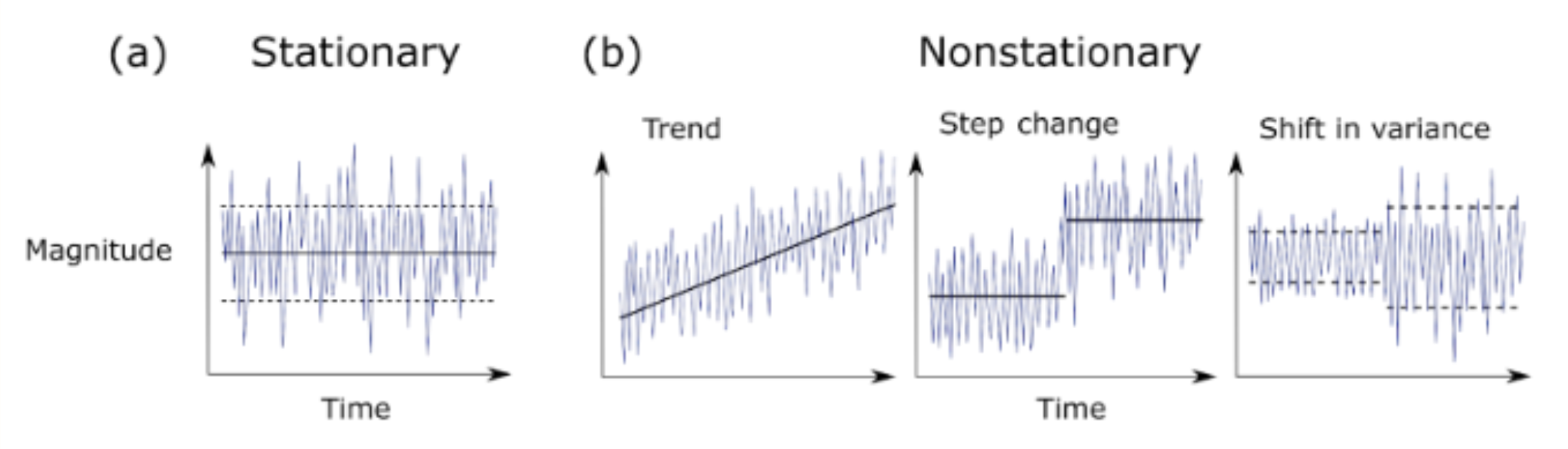
The stationarity/nonstationarity of hydrologic systems is a fundamental principle of water management and important to understand. So, what is the difference between a stationary and nonstationary time-series dataset? The figure above presents the difference, showing:
Water supply and management infrastructure is designed based on best knowledge of the local hydrology. Historically, stationarity has been assumed for these plans and designs, but increasingly elements of nonstationarity, from a variety of sources, can no longer be ignored.
Through much of the last century, available data suggested that the hydroclimate and hydrologic systems were generally stationary around mean values. This stationarity was the foundation of many approaches and tools for the planning and designing of water supply and management infrastructure. But as hydrologic records became longer, the new view suggested that natural variability in the hydroclimate was not truly stationary in the sense it had been applied. According to R. M. Hirsch (2010) it has for awhile been widely recognized and accepted in the hydrologic community that the stationarity assumption may be invalid in many cases. He suggests the following three reasons why hydrologic systems may not exhibit stationarity.
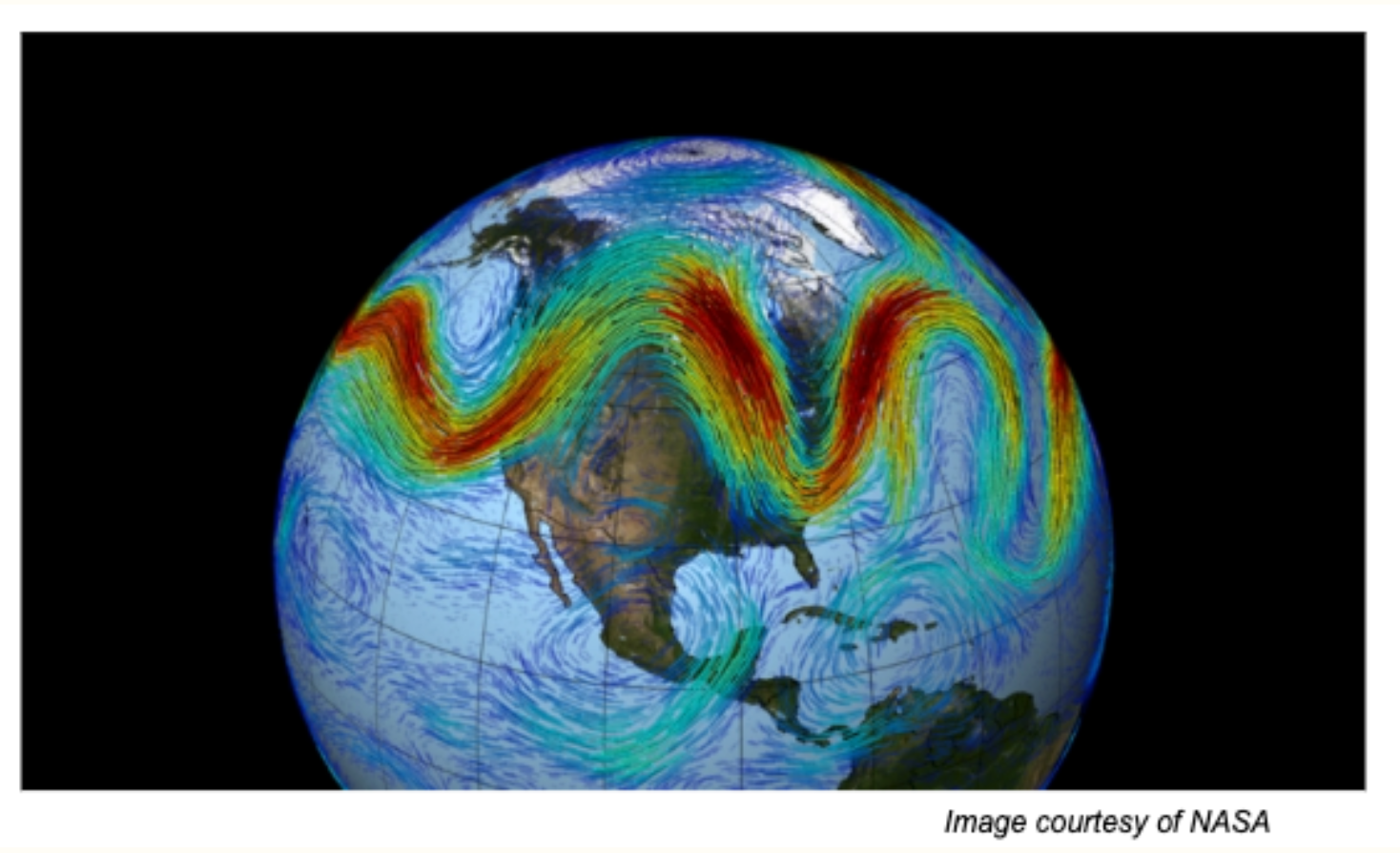
With these different potential sources of nonstationarity in hydrologic datasets described by Hirsch (2010), he calls it “imperative” that measurement of precipitation and streamflow, soil moisture and groundwater, and snowpack and glaciers continue with a high priority. Further, Hirsch (2010) suggests that the continuity of data and data analysis at established sites have higher priority than beginning the collection of data from more locations.
Milly and others (2015) re-emphasize the importance of data in their response to critiques of their 2008 article ‘Stationarity is Dead: Whither Water Management?’’. Because of the uniqueness and immensity of climate change on the global hydrologic and energy cycles, Milly and others (2015) state again in 2015 as they did in 2008 ‘‘In a nonstationary world, continuity of observations is critical.’’ Long-term hydrologic observations are essential to quantify, on an ongoing basis, how the physical drivers of hydrologic systems are being altered by climate change, and in turn, how approaches and tools must evolve for planning and designing water supply and management infrastructure.
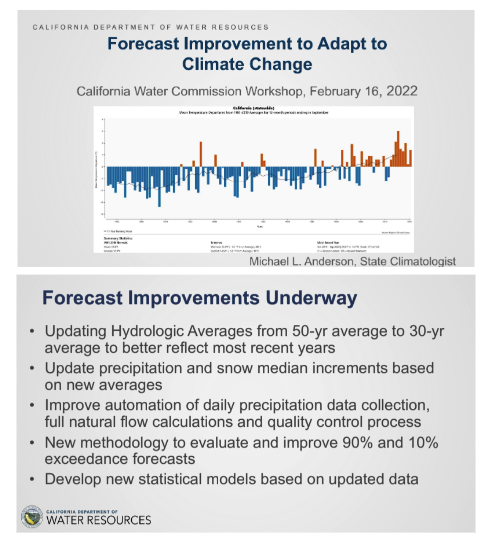
From California comes an example of a response to the need for robust hydrologic observations and for the continual updating of hydrologic frequency analysis. The State Climatologist has improvements underway to the state’s hydrologic forecasting (Anderson, 2022), including adjusting Hydrologic Averages to better reflect most recent hydrologic experiences, refining statistical models using updated data, and taking new approaches to improve the forecasting of extreme weather events (10% and 90% exceedance).
Water supply and management infrastructure is designed based on best knowledge of the local hydrology. Historically, stationarity has been assumed for these plans and designs, but increasingly elements of nonstationarity, from a variety of sources, must be accounted for. The need for continuous, local hydrological data is increasing, while the ability of government agencies to collect and interpret these data is flat or declining. Even when funds for science are more readily available, state and federal agencies can not collect data at a pace and in enough places to address issues most important to local communities for water management. Fortunately, municipalities, communities, and other stakeholders can now join together to create powerful networks of Wellntel systems to provide the “continuity of observations” that focuses directly on their most critical groundwater resource concerns.
Sources
Anderson, M. L., Forecast Improvement to Adapt to Climate Change, California Water Commission Workshop, February 16, 2022
Hirsch, R. M.: A Perspective on Nonstationarity in Water Management, Colorado Water — March / April, 2010, Volume 27, Issue 2, 5-6, accessed on March 20, 2023 at A Perspective on Nonstationarity in Water Management (wucaonline.org)
Milly, P. C., Betancourt, J., Falkenmark, M., Hirsch, R. M., Kundzewicz, Z. W., Lettenmaier, D. P., and Stouffer, R. J.: Stationarity is dead: Whither water management?, 2008, Science, 319, 573–574, accessed on March 20, 2023 at https://www.law.berkeley.edu/files/CLEE/Milly_2008_Science_StationarityIsDead.pdf
Milly, P. C. D., J. Betancourt, M. Falkenmark, R. M. Hirsch, Z. W. Kundzewicz, D. P. Lettenmaier, R. J. Stouffer, M. D. Dettinger, and V. Krysanova, 2015, On Critiques of ‘‘Stationarity is Dead: Whither Water Management?,’’ Water Resour. Res., 51, 7785–7789, doi:10.1002/ 2015WR017408. accessed on March 20, 2023 at On Critiques of “Stationarity is Dead: Whither Water Management?” - Milly - 2015 - Water Resources Research - Wiley Online Library
Slater, L. J., Anderson, B., Buechel, M., Dadson, S., Han, S., Harrigan, S., Kelder, T., Kowal, K., Lees, T., Matthews, T., Murphy, C., and Wilby, R. L.: Nonstationary weather and water extremes: a review of methods for their detection, attribution, and management, 2021, Hydrol. Earth Syst. Sci., 25, 3897–3935, accessed on March 20, 2023 at https://hess.copernicus.org/articles/25/3897/2021/