
.png)
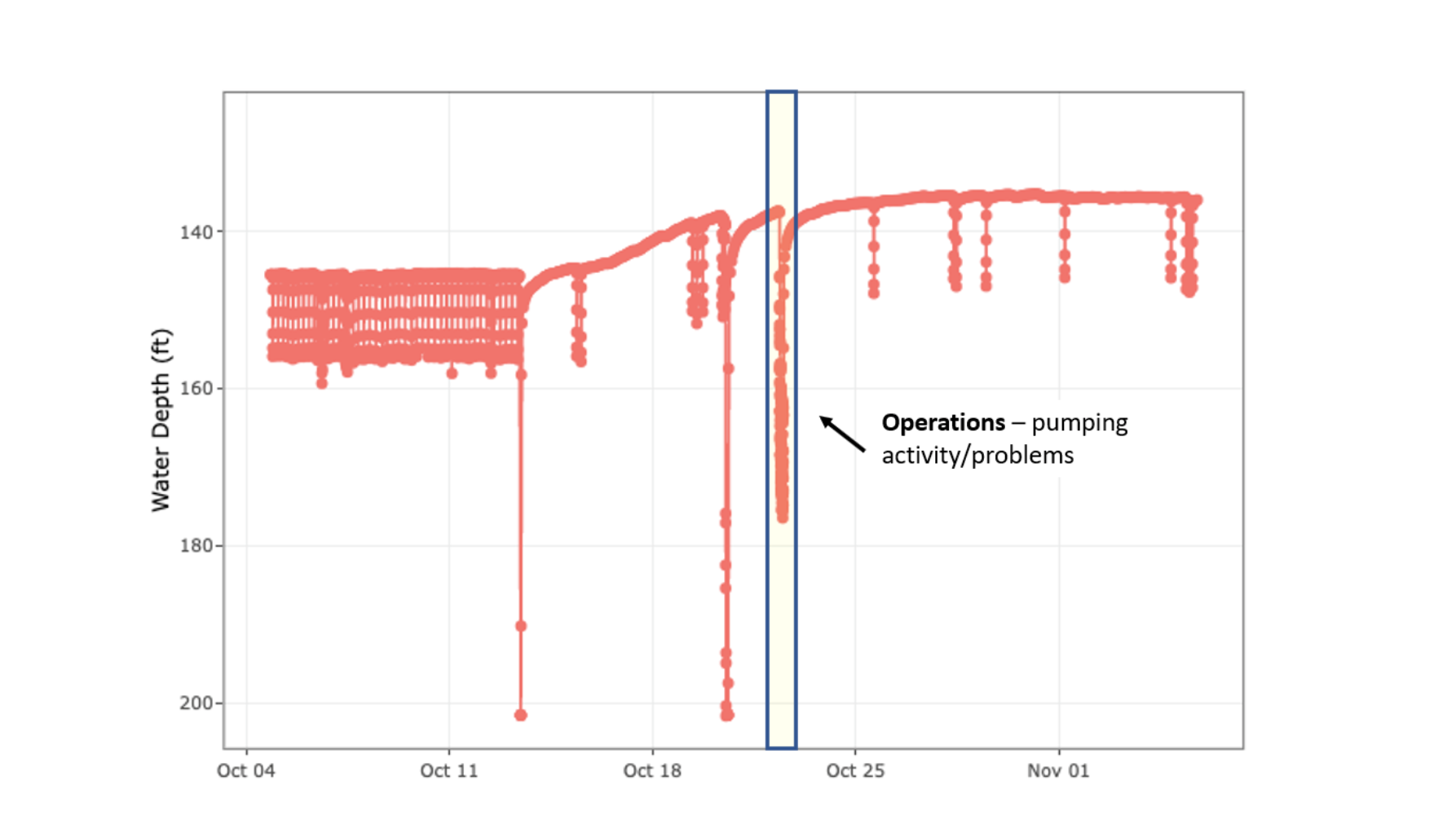
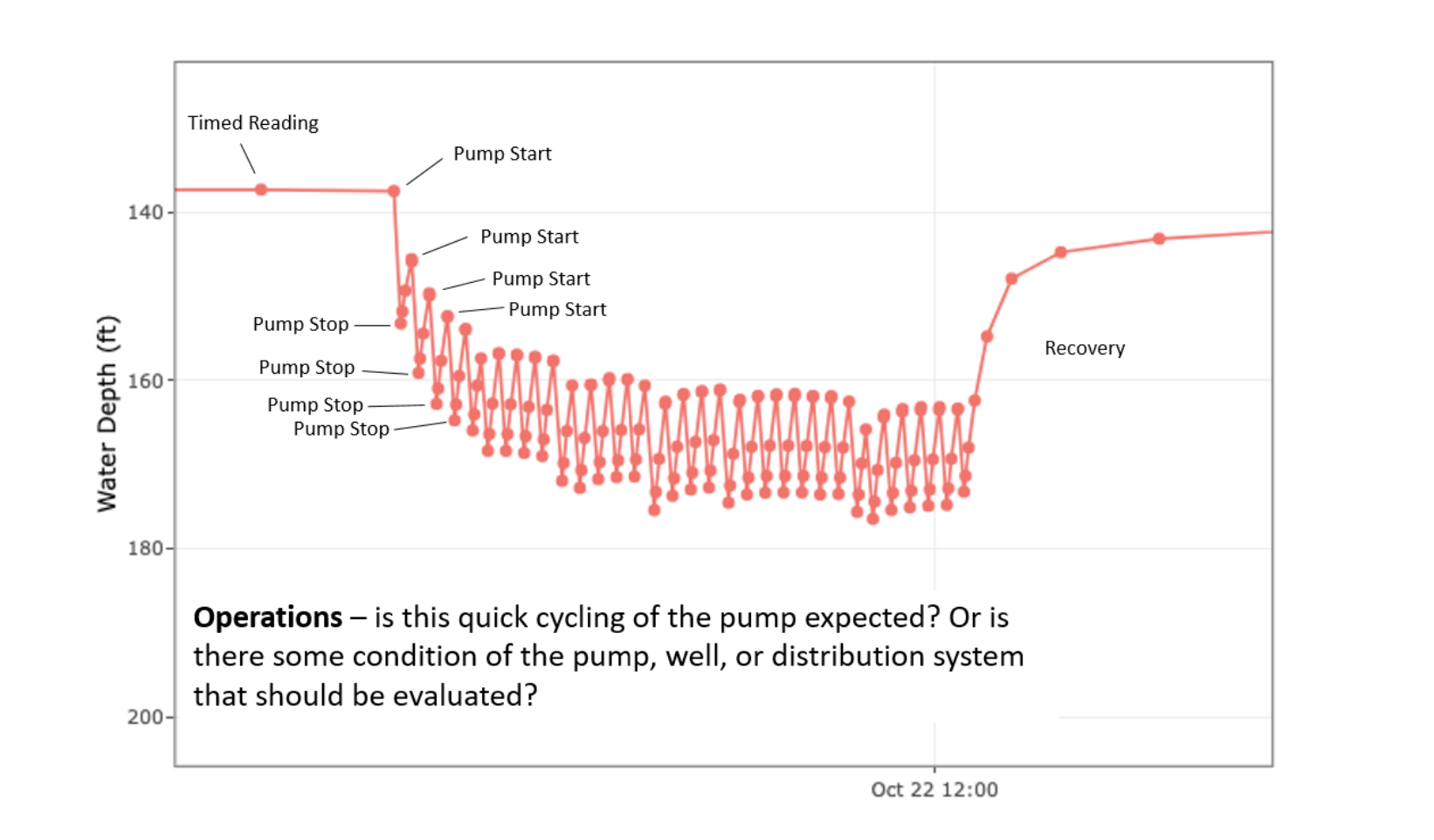
The preceding parts of this series explored how the monitoring of water levels in a well is critical to understanding the groundwater resource available to support a home or community, a farm, or a business. In addition, monitoring the fluctuations of water level related to pumping activity provides insight into the local aquifer characteristics. This last part of the series uses the hydrograph from the same well in the Hill Country of Texas. (Figure 1). The highlighted section of the hydrograph is expanded (Figure 2) to show that this particular pumping event is made up of many short pumping events each with a Pump Start and Pump Stop measurement event. In each case, following the Pump Stop event, recovery water levels are measured until the pump starts again causing the measurement of level for Pump Start, followed by Pump Stop and Recovery. After some time, and about 30 short pumping cycles, the condition is ended and the well begins its recovery to a true static water level.
Pump cycling like this could have any number of causes, intentional or not. Regardless, it is important for the well owner/operator to be aware of the pumping activity and be able to monitor the dynamics of the pumping and drawdown.
Part 4 concludes this series of short articles Identifying Three Critical Local Elements of Aquifer Health.