
Short answer
Yes, for measuring groundwater levels. An existing production well can work as a monitoring well if you can tell pumping from resting conditions. Most guidance that says "no" is about water-quality sampling, which needs a dedicated well with a short screen to catch contamination at a specific depth.
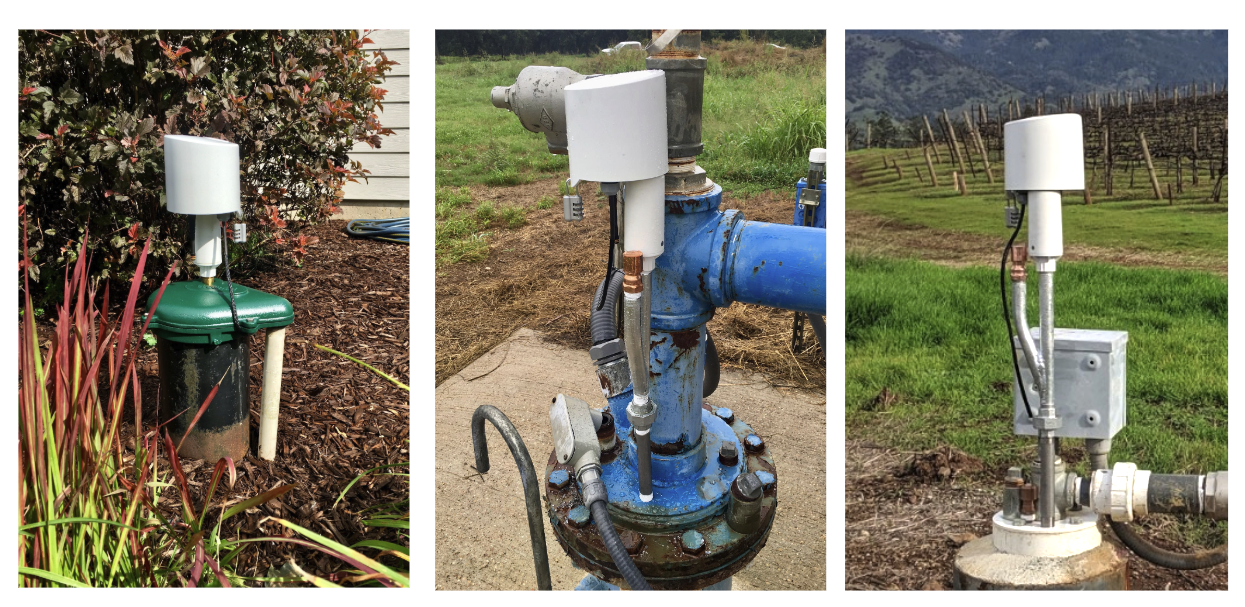
Water level is a different measurement. An acoustic sensor at the top of a well with a submersible pump can record depth to water many times a day. If each reading is tagged as a scheduled reading or a pump event, the resting water table separates cleanly from the drawdown during pumping.
INTERA has operated a network like this on 89 homeowner wells in Central Indiana for 4.5 years. It has collected more than 367,000 static water-level measurements on 4-hour intervals. No monitoring wells were drilled, no drilling rig was required.
Quote highlighted: “The practical gap is not the absence of wells. It is the small number converted into sustained, comparable time series.” - Garrett Marietta, Geologist, INTERA
Water level vs. water quality: why the answers differ
State guidance often discourages using supply wells for monitoring, and for water quality the reasons are sound. Supply wells are drilled deep with long screens to produce more water. As a result, water from several zones is blended and can mask contamination that a shallow, short-screened well would catch early.
Water level is a different question: where the water table sits and how it changes over days, seasons, and years. A production well is open to the aquifer it draws from, so its resting level reflects the saturated thickness of that aquifer. The only real challenge is that pumping activity lowers the resting water levels; the method of data collection solves this challenge .
What makes production-well data reliable
Four things turn a working supply well into a trustworthy monitoring point:
The evidence: 4.5 years in central Indiana
INTERA presented results from its Wellntel-instrumented network at the Great Lakes Groundwater Conference of the American Ground Water Trust on September 10, 2026:
INTERA describes the network as "not a research pilot" and "not a special deployment": rather production wellheads, one field crew, one data pipeline.
Every pump cycle is a free aquifer test
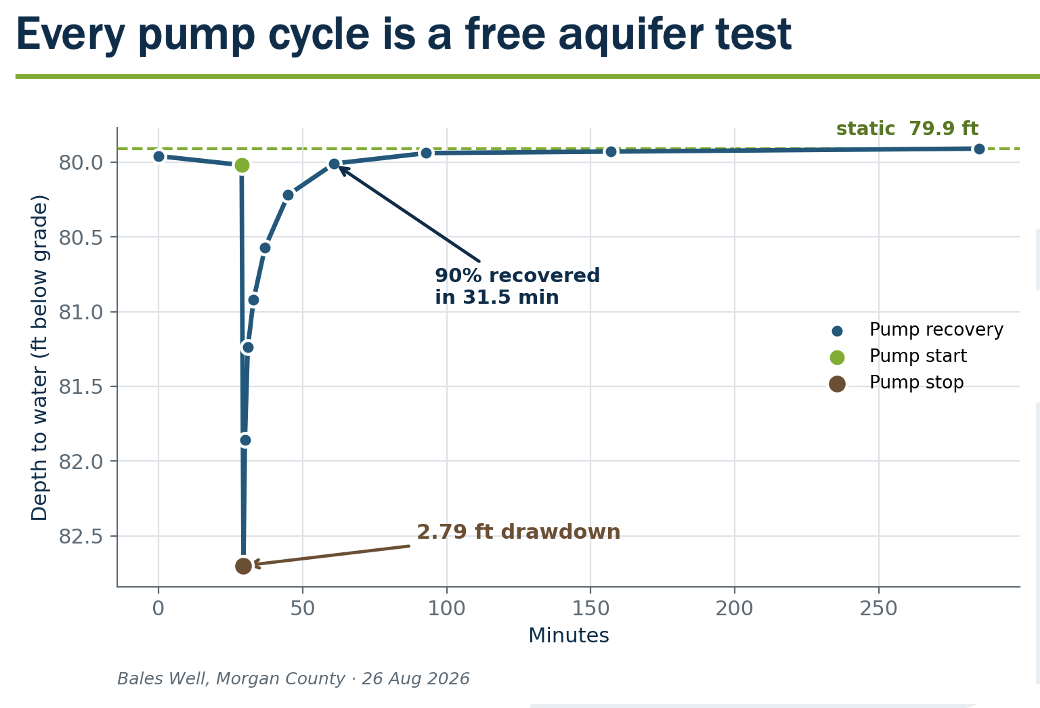
Because pump events are logged with the measurement of level, each cycle shows how the aquifer responds. At one Morgan County well, the pump drew the level down 2.79 feet. It recovered 90% in 31.5 minutes and fully within 5 hours. The same well logged 77 pump cycles in 72 hours.
Tracked over time, recovery patterns and recurring calculation of specific capacity can point to changes in local aquifer conditions and to screen fouling.
Density finds what spacing rules miss
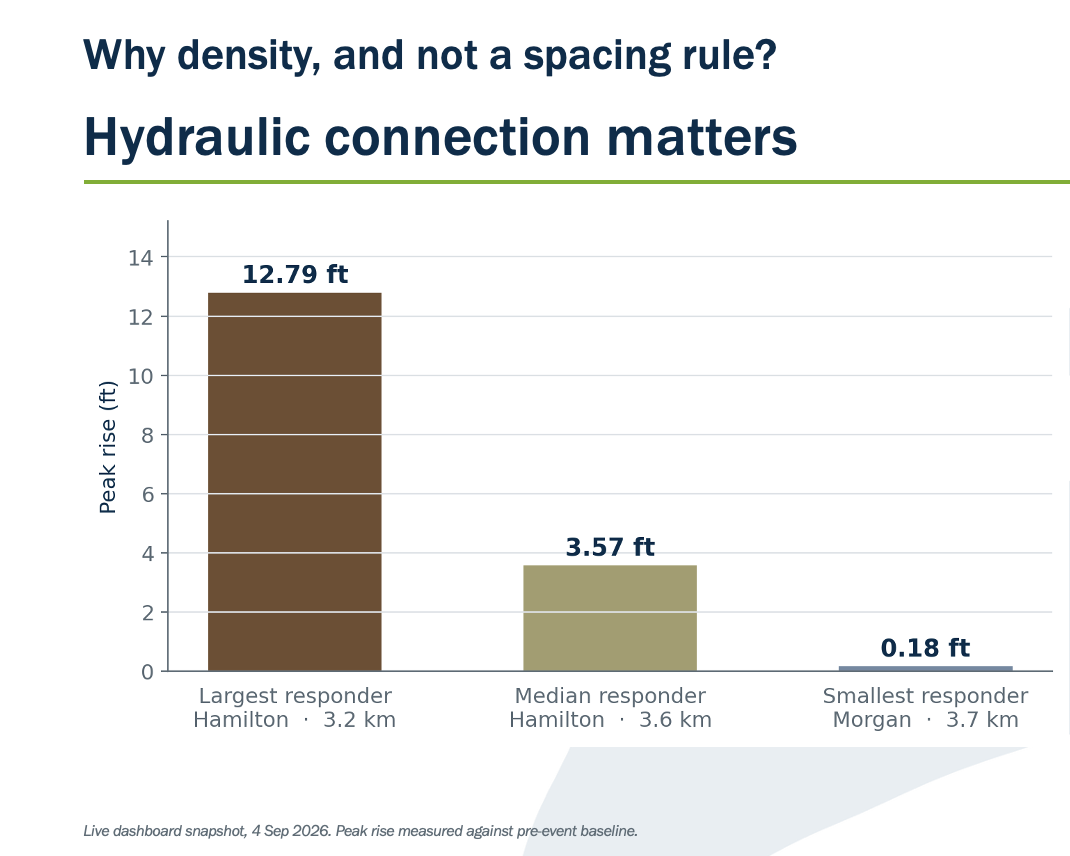
The White River flows through the INTERA monitoring network, and in August 2026, the river reached a record crest. Two monitoring wells, both 3–4 km from the river, behaved very differently in response to the river level. One well rose 12.79 feet and the other rose 0.18 feet, a 70-fold difference.
Across 39 wells, distance from the river explained only 2% of the variation in response to the high river stage. Hydraulic connection of the river to the aquifer mattered, and that only shows up with many wells. Leveraging existing supply wells makes that density affordable.
Dedicated monitoring well vs. instrumented production well

Limits to know
Frequently asked questions
Does pumping ruin the water-level data? No, as long as pump events are labeled. Timed measurements show the resting water table, and pump-labeled readings show drawdown and recovery. Together they tell you more than a resting level alone.
How accurate is a wellhead acoustic sensor? The Wellntel system measures level to within 0.1 foot over the range from 10 to 1,000 feet depth to water, once installation and calibration are complete. The Antelope Subbasin Community Domestic Well Monitoring Plan (Tehama County, California, June 2025) cites that figure in Section 4.2.1, page 5.
Do you have to pull the pump to install a sensor? No. The Wellntel sensor installs into a standard ½" NPT port on the well seal and measures with sound, without touching the water.
How many existing water supply wells could be used? The eight U.S. Great Lakes states alone hold more than 4.25 million well records. That is a screening pool, and not every well will be suitable. Nationally, there are more than 15 million private production wells.
Sources